Retail Master is a product we build and run ourselves, not a client engagement. It started from one observation: the businesses around us did not need more features. They needed one system that holds together, priced so it doesn’t punish growth.
Offline-first at the counter
A checkout cannot wait for the network. The Sales POS processes barcode scans, bills and payments locally and queues every transaction. When the connection comes back it syncs on its own, with no cashier involvement and no lost sales. The same rule applies on the restaurant side, where table management and the kitchen display system (KDS) keep orders moving through the kitchen.
One data model, eleven modules
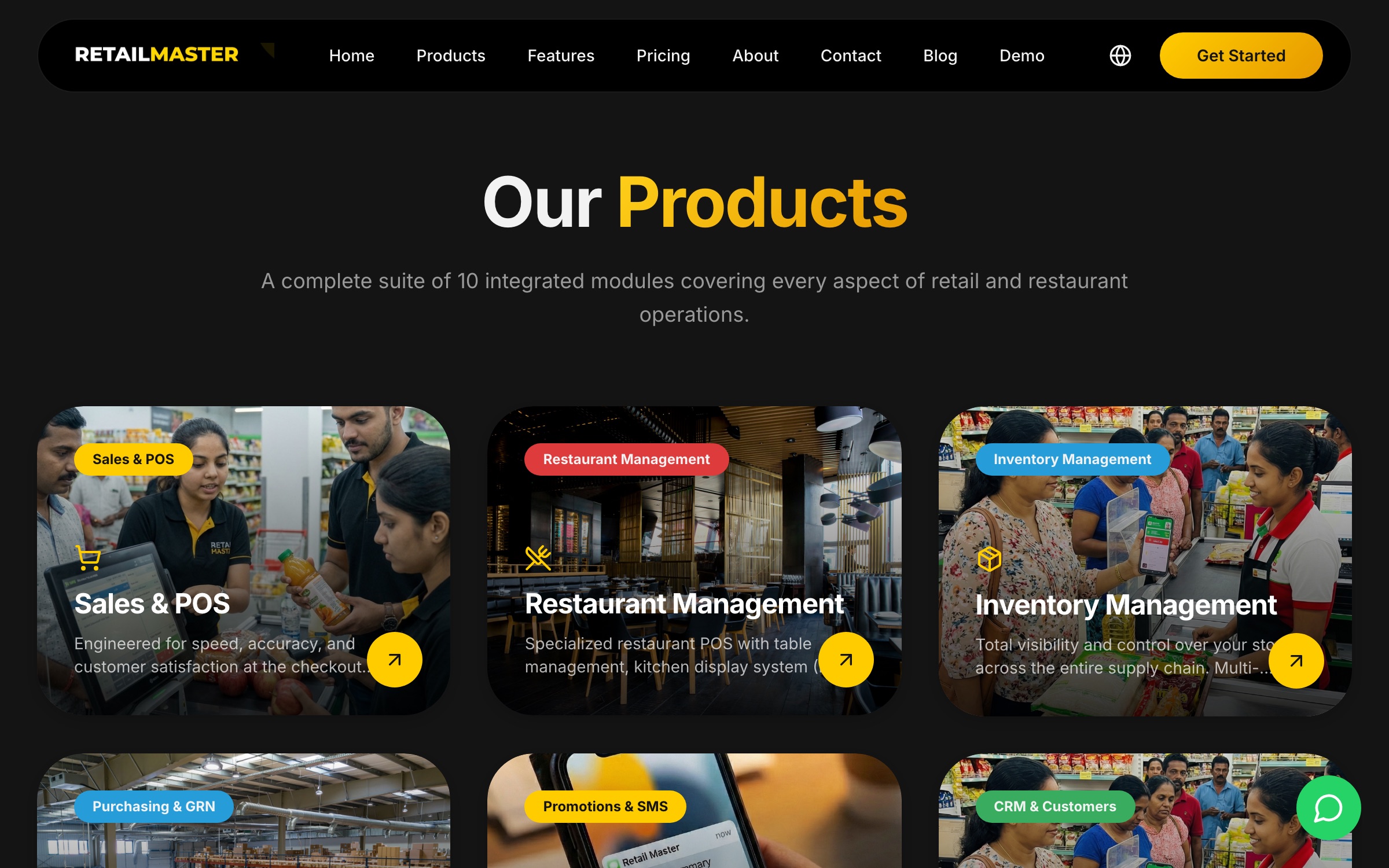
Every module reads from and writes to the same records. A sale updates stock immediately. A goods received note (GRN) updates supplier balances and the general ledger. A cashier’s shift ends up in the reports without anyone exporting it. Purchasing uses sales-velocity analysis to suggest order quantities, so reordering is based on what actually sells instead of guesswork.
- Sales & POS: fast barcode billing with offline mode
- Restaurant: tables, KDS, menus and order tracking
- Inventory: stock tracked across warehouses and outlets
- Purchasing & GRN: order quantities suggested from sales velocity
- Promotions & SMS: targeted campaigns, dynamic discounts, built-in SMS
- CRM: customer profiles and credit accounts secured with OTP
- Suppliers, Accounts & Finance: vendor balances, chart of accounts, bank reconciliation
- HR & Payroll: employee records and automated salary runs
- Reports & Security: real-time reporting, custom roles, device registration and audit logs
Pricing that doesn’t punish growth
There are four plans, from Starter (LKR 4,990/month) to Enterprise (LKR 19,990/month). None of them charges per user or per location. A business opening its fifth branch pays the same as it did for its first, and it keeps the same system, the same data and the same staff training.
Built for real hardware
Shops already own their hardware. Retail Master runs on dedicated touch-screen terminals, restaurant POS units, office PCs, tablets and phones, so an owner can check today’s sales from anywhere without buying new devices.